Rivers State and the Lessons Before 2027
 Tamenor Kwaghzer
Jan 3, 2026 11:48
224
0
Tamenor Kwaghzer
Jan 3, 2026 11:48
224
0
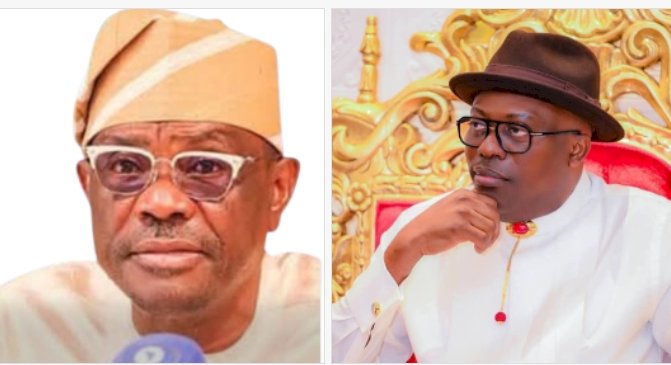
By Henry Briggs
The recent political crisis in Rivers State offers an important lesson for leaders and citizens alike. It showed how democracy suffers when power struggles replace governance and when former office holders refuse to step back after their tenure.
After leaving office as governor, Nyesom Wike remained heavily involved in Rivers State politics. His prolonged influence and the resulting disagreement with Governor Siminalayi Fubara led to political instability, legislative paralysis, and eventually the declaration of a State of Emergency in 2025. During this period, democratic institutions were suspended, and ordinary citizens bore the cost.
This crisis was not just about politicians. Governance slowed, budgets were delayed, and public services were affected. Democracy was paused because political actors failed to manage power responsibly.
The Rivers experience highlights a recurring challenge in Nigerian politics: when individuals become more powerful than institutions, democracy weakens. Leadership in a democracy has a clear beginning and end. Once a tenure expires, governance should fully rest with the elected successor. Continued interference undermines public trust and destabilizes society.
As the 2027 general elections approach, Rivers voters face a crucial choice. This election should not be about personalities or political loyalty, but about strengthening institutions, accountability, and peace. Citizens must ask critical questions: Who respects the rule of law? Who allows democratic institutions to function freely? Who prioritizes stability over personal control?
Peace is not a favour from leaders; it is a constitutional duty. Stability allows development, investment, and social progress to thrive. Political peace is a sign of maturity, not weakness.
Rivers State has an opportunity to lead by example in 2027. Democracy belongs to the people, and no individual is bigger than the state.